
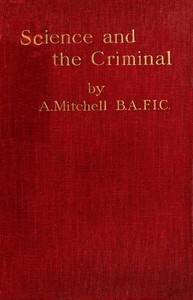
Science and the Criminal by C. Ainsworth Mitchell
Forget everything you know about modern crime scene investigation. Science and the Criminal drops you right at the messy, groundbreaking moment it all started. Written in 1911 by C. Ainsworth Mitchell, a practicing chemist, this book is his firsthand account of how science began to untangle the knots of criminal cases.
The Story
There's no single plot. Instead, Mitchell acts as your guide through a series of real-world puzzles. Each chapter tackles a different branch of early forensics. You'll see how chemists learned to detect tiny amounts of poison in a victim's stomach. You'll watch document examiners pioneer the analysis of ink, paper, and handwriting to expose forgeries. Mitchell explains the first, crude methods for analyzing blood, dust, and even dirt from a suspect's shoe. The 'story' is the tension in each case: can this new scientific evidence hold up in court against a charismatic lawyer's doubts or a traditional detective's theory? It's the drama of proof being born.
Why You Should Read It
What hooked me was the sheer humility and excitement of it. These scientists were making it up as they went along! Mitchell doesn't write as a distant expert, but as a guy in a lab coat who's genuinely amazed that his test tubes can help deliver justice. You feel the frustration when methods fail and the triumph when they work. It completely reframes modern forensics. When you watch a TV show and they get a DNA match in minutes, you'll appreciate the decades of trial and error that made it possible. This book is the origin story for all of that.
Final Verdict
Perfect for true crime fans who want to go deeper than the podcast, and for history buffs who love seeing how ideas change the world. It's also a great pick for any science-minded reader curious about practical applications. The writing is clear and surprisingly lively for its age—Mitchell has a knack for explaining complex chemistry without losing you. Just be ready for a different pace; this isn't a thriller, it's a fascinating conversation with one of forensic science's first pioneers. You come away with a real sense of wonder for how far we've come.
This masterpiece is free from copyright limitations. Share knowledge freely with the world.
Dorothy Garcia
1 year agoMy professor recommended this, and I see why.
Thomas Johnson
1 year agoEnjoyed every page.
Aiden Anderson
2 years agoThe fonts used are very comfortable for long reading sessions.
Melissa Robinson
2 years agoGreat read!
Nancy Anderson
2 months agoFinally found a version that is easy on the eyes.