1

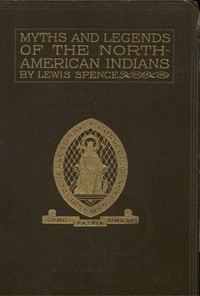
The Myths of the North American Indians — Text and Context
(0 User reviews)
2865
Project Gutenberg
2013
Not confirmed
Indians of North America -- Folklore; Indian mythology -- North America
Readers of public-domain and historical texts
Project Gutenberg digital edition
en
Edition facts
Words
122,935
Reading time
535 min
Text sections
13
The source record for The Myths of the North American Indians — Text and Context measures this digital text at 122,935 words, 8 hr 55 min estimated reading time, and 13 detected text sections.
The text analysis averages about 20.0 words per sentence, while the detected sections provide another way to judge how the source is divided.
Project Gutenberg metadata also associates the work with “Indians of North America -- Folklore,” connecting these edition facts with the source record’s subject description.
Source:
Project Gutenberg record #42390
Lewis Spence's 1914 survey of North American Indian mythologies, structured by cultural region and supplemented with James Jack's color plates. The work emphasizes the distinct mental outlook of Indigenous peoples and includes tales such as the Blackfoot story of Scar-face (Poïa), whose journey to the Sun is marked by a scar that only the Sun can remove.
Editorial Edition Score
4.9/5
★★★★★
★★★★★
Calculated from edition completeness, EPUB availability, text structure and catalogue metadata. Not a user rating.
How this score is calculated
- Description quality20 pts
- Title & short description10 pts
- Source metadata20 pts
- Text length15 pts
- Chapters / structure15 pts
- EPUB file integrity20 pts
Total of 100 points, scaled to a 2.5-5.0 range. Editions with an empty description or a missing EPUB file are not scored.
Edition quality
Read the Text
I. Divisions, Customs, and History of the Race II. The Mythologies of the North American Indians III. Algonquian Myths and Legends IV. Iroquois Myths and Legends V. Sioux Myths and Legends VI. Myths and Legends of the Pawnees VII. Myths And Legends of the Northern and North-western Indians Bibliography Glossary and Index
LIST OF ILLUSTRATIONS
Sîñ takes the Form of a Woodpecker . . . . . . _Frontispiece_
An Elderly Omaha Beau
Omaha Woman's Costume
Adventure with a Totem
Indian Picture-writing: A Petroglyph in Nebraska
The Lenâpé come to the Place of Caves
"Glooskap brought all his magical resources to his aid"
"He descried a great _tepee_"
Algon carries the Captured Maiden Home to his Lodge
Moowis has melted in the Sun
"He rode down the wind"
"'Will you carry us over the river?' she asked"
"He poised his spear and struck the girdle"
"Gazing downward, she saw the camp of the Blackfeet"
"He suddenly assumed the shape of a gigantic porcupine"
"'I see thee! I see thee! Thou shalt die'"
"He lit the pipe and placed it in the mouth of the skeleton"
"'Grow larger, my kettle!'"
"She sang a strange, sweet song"
"Soon the dancing commenced"
"He jumped so high that every bone in his body was shaken"
The War-chief kills the Monster Rattlesnake
"He leaned his shoulder against the rock"
"With one great step he reached the distant headland"
"They arrived at the abode of the Water-god"
"He emerged in his own country"
"Everything happened as the Man of Wood had predicted"
"Once more the Rabbit entered, disguised as a man"
"He seized hold of the hair"
A Fishing Expedition in Shadowland
"The mists came down, and with them the Supernatural People"
MAP SHOWING THE LINGUISTIC STOCKS OF THE NORTH AMERICAN INDIANS
CHAPTER I: DIVISIONS, CUSTOMS, AND HISTORY OF THE RACE
The First Indians in Europe
Almost immediately upon the discovery of the New World its inhabitants became a source of the greatest interest to all ranks and classes among the people of Europe. That this should have been so is not a little surprising when we remember the ignorance which prevailed regarding the discovery of the new hemisphere, and that in the popular imagination the people of the new-found lands were considered to be inhabitants of those eastern countries which European navigation had striven so long and so fruitlessly to reach. The very name 'Indian' bestowed upon the men from the islands of the far western ocean proves the ill-founded nature and falsity of the new conditions which through the discovery of Columbus were imposed upon the science of geography. Why all this intense and vivid interest in the strange beings whom the Genoese commander carried back with him as specimens of the population of the new-found isles? The Spaniards were accustomed to the presence and sight of Orientals. They had for centuries dwelt side by side with a nation of Eastern speech and origin, and the things of the East held little of novelty for them. Is it not possible that the people, by reason of some natural motive difficult of comprehension, did not credit in their hearts the scientific conclusions of the day? Something deeper and more primitive than science was at work in their minds, and some profound human instinct told them that the dusky and befeathered folk they beheld in the triumphal procession of the Discoverer were not the inhabitants of an Orient with which they were more or less familiar, but {2} erstwhile dwellers in a mystic continent which had been isolated from the rest of mankind for countless centuries.
There are not wanting circumstances which go far to prove that instinct, brushing aside the conclusions of science, felt that it had rightly come upon the truth. The motto on the arms granted to Columbus is eloquent of the popular feeling when it states,
To Castile and Leon Columbus gave a new world,
and the news was greeted in London with the pronouncement that it seemed "a thing more divine than human"--a conclusion which could scarcely have been arrived at if it was considered that the reaching of the farthest Orient point alone had been achieved.
The primitive and barbarous appearance of the Indians in the train of Columbus deeply impressed the people of Spain. The savage had before this event been merely "a legendary and heraldic animal like the griffin and the phoenix." In the person of the Indian he was presented for the first time to the astonished gaze of a European people, who were quick to distinguish the differences in feature and general appearance between the Red Man and the civilized Oriental--although his resemblance to the Tartar race was insisted upon by some early writers.
Lewis Spence opens The Myths of the North American Indians with a pointed observation: the European reader, saturated with childhood tales of the “Red Man,” too readily relegates Indian mythology to “the matter of Faery and such evanescent stuff.” The preface insists on a basic difference between the Indian and European mental outlook, a theme that shapes the entire volume. Spence, a folklorist and author of earlier works on Mexican and Peruvian myths, organizes his material by cultural region—Algonquian, Iroquois, Sioux, and others—and includes thirty-two colour plates by James Jack. The book does not simply retell stories; it attempts to place them within a framework of anthropological understanding, even as it acknowledges the scarcity of reliable English-language sources at the time of its 1914 publication.
A Regional Framework for Myth
Spence divides his subject into thirteen sections, each corresponding to a linguistic or cultural group. This structure allows the reader to compare creation tales, trickster cycles, and hero journeys across the continent. The Blackfoot story of Scar-face (Poïa), for example, appears within the Algonquian section. Poïa, the scarred grandson of the Sun, undertakes a journey to the Sun’s abode to have his disfigurement removed—a quest that echoes themes of separation and return found in other traditions. The regional arrangement underscores how geography and language shape mythological motifs, though Spence occasionally generalizes across tribes within a region, a limitation of early twentieth-century ethnology.
Recurring Images: The Turnip and the Web
In the Blackfoot tale excerpted, two images recur with symbolic weight. The first is the large turnip that plugs the hole between earth and the Sky-country. When Feather-woman disobeys the Moon’s warning and uproots it, she glimpses her former home and is overcome with homesickness. The turnip functions as both a physical barrier and a test of obedience. The second image is the spider’s web used by the Spider Man to lower Feather-woman back to earth; the people see her “coming to earth like a falling star.” These concrete objects—root-digger, turnip, web—anchor the supernatural journey in tangible, domestic details, a pattern Spence highlights throughout the collection.
Movement Between Worlds
The Scar-face narrative is structured by a series of vertical movements: from earth to Sky-country, back to earth, and then a second ascent to the Sun. Feather-woman’s initial journey is passive—she is taken by Morning Star—but her return is forced, mediated by the Spider Man. Poïa’s later journey is active and voluntary, undertaken with “pemmican and moccasins” as provisions. Spence’s retelling emphasizes the physical effort of climbing mountains and crossing waters, grounding the myth in a landscape of real exertion. The contrast between the two journeys—one caused by transgression, the other by resolve—gives the narrative a moral and structural symmetry.
The Scar as Mark and Motif
Poïa’s scar is the central puzzle of the tale. It is placed on his face by the Sun, and only the Sun can remove it. The scar isolates him: he is mocked by the tribe, and the woman he loves tells him she will marry him only when it is gone. Spence does not explain the scar’s origin beyond the medicine-woman’s statement, leaving it as an inherited mark of celestial parentage. This motif of a physical sign that must be erased through a journey recurs in other North American traditions, and Spence’s inclusion of the story without over-interpretation allows readers to see the pattern for themselves. The scar is not merely a plot device; it is a visible link between the human and the divine.
Readers approaching this collection should note that Spence writes as a compiler and interpreter, not as a member of the cultures he describes. His regional groupings and occasional comparisons to European mythology reflect the scholarly conventions of his era. The value of the book lies in its breadth and in the vividness of the tales themselves—stories of transformation, journey, and consequence that reward attention to recurring objects and movements. James Jack’s colour plates, though not reproduced here, were designed to complement the text’s visual imagination.
Leafing through Spence’s myths, I lingered on Scar-face’s scar—a mark the Sun alone could heal. It made me think of another lonely journey, another hidden wound, in Jaufry the Knight and the Fair Brunissende: A Tale of the Times of King Arthur — A Closer Reading. Both tales carry that quiet ache of being seen, finally, exactly as one is.
There are no reviews for this eBook.
There are no comments for this eBook.
Reader reflection
How did this book work for you?
Your answers remain private and are stored only in this browser.
Your progress
0
/
10
2
How did the book work for you overall?
3
How likely are you to recommend this book?
4
How much effort did this book require?
5
Did the story or argument move comfortably?
6
Did any part of the book feel personally relevant?
7
How useful did the reading feel?
8
Could you follow the author’s main argument?
9
In one sentence, what did you learn?
10