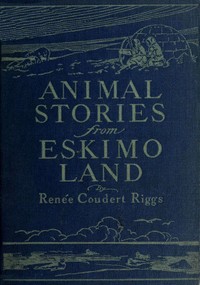
Animal Stories from Eskimo Land Adapted from the Original Eskimo Stories Collected by Dr. Daniel S. Neuman — Themes and Context
Edition facts
The source record for Animal Stories from Eskimo Land Adapted from the Original Eskimo Stories Collected by Dr. Daniel S. Neuman — Themes and Context measures this digital text at 28,448 words, 2 hr 4 min estimated reading time, and 24 detected text sections.
The text analysis averages about 19.3 words per sentence, while the detected sections provide another way to judge how the source is divided.
Project Gutenberg metadata also associates the work with “Animals -- Folklore,” connecting these edition facts with the source record’s subject description.
Calculated from edition completeness, EPUB availability, text structure and catalogue metadata. Not a user rating.
How this score is calculated
- Description quality20 pts
- Title & short description10 pts
- Source metadata20 pts
- Text length15 pts
- Chapters / structure15 pts
- EPUB file integrity20 pts
Total of 100 points, scaled to a 2.5-5.0 range. Editions with an empty description or a missing EPUB file are not scored.
Read the Text
eard the whale man coming in. He pretended to be a kind man and very polite, but Ivango knew better than to believe him. The whale man could not fool Ivango.
After a little while, the whale man told Ivango to fetch his brothers to eat supper with them, and the brothers came. The whale man gave them a good supper with plenty to eat, but they watched carefully, for they knew that he was just waiting for a chance to do them some harm.
When night came the whale man suggested that they play all sorts of games. Ivango beat him every time, and he did not seem to like that at all.
The next morning he took them out to see a big ditch that had been dug during the night. All the men of the village were bringing logs of wood and pokes (skin bags) of oil to the ditch.
The whale man called Ivango and told him to look down into the ditch, and while he was looking gave him a shove. Ivango, taken by surprise, lost his balance and fell in.
Down went Ivango into the deep dark hole. When he reached the bottom he stood still and felt the sides of the ditch all about him, until suddenly his hands came upon a great stone embedded in the earth on one side of the hole. Digging quickly into the earth with his fingers, he dragged out the huge stone and found a deep hole in the earth back of it. Into this hole he crept, pulling the stone into place after him. Outside, the whale man built a big fire with logs and oil and shoved it into the pit, thinking that Ivango would be burned up; but Ivango was safe behind the rock, and the fire never even singed his mukluks. When the flames had died down and there was nothing left but ashes, he crept out from his hiding-place and called for some one to let down a rope for him to climb up by. Soon he saw the rope coming down. It was made of walrus hide such as is used for lashing boats. Ivango took hold of the end of the rope and his brothers pulled him out.
The whale man stood there looking much surprised to see him come out unharmed, and Ivango, springing upon him, hurled him into the pit. Then turning to the people, Ivango said, “If this man is unkind to you, bring some more wood and oil and we will burn him up. If he is good to you, let down the rope again and pull him out after we have gone away.”
“No, no!” they shouted loudly. “We do not want to pull him out. He is not good to us at all, but very wicked and cruel. Let us burn him up!” and they all ran to bring more wood and oil, much more than before and made a great fire themselves and threw it into the pit before Ivango could stop them.
Ivango and the brothers and their little sister hurried down to the sea, where the woman was waiting for them with the boat, and started off for home as fast as they could paddle.
This time they passed through the moving cliffs without fear or trouble, but no sooner had the cliffs closed together behind them, than a big white whale rose to the top of the water and pursued them.
Although they could make the boat go as fast as the swiftest bird, the whale was faster than they and was getting very close. Just as the monster rose beside them, the woman cut off the right flipper from the seal they had brought with them and threw it to the whale, which stopped to eat. This gave them time to get quite far ahead; but after the whale had finished eating he soon caught up with them. Then the woman threw out the left flipper. Again the whale stopped to eat, and again caught up with them, but they were nearly home, so they threw over the rest of the seal and paddled to shore. When they landed the whale hurried after them so fast that he swam right up on the beach, where they killed him and cut him up for meat.
The people of the village crowded about to welcome Ivango and his brothers and the little lost sister, and they all had a fine feast of the meat of the whale.
They lived happily after that and Ivango made many presents to the good woman who had helped them to find their sister, so that she was never allowed to want for anything all her life long.
When Nugukuk had come to the end of the story, he raised his eyes to the face of the chief. “And so is the winter shortened,” said Nugukuk solemnly. For that is the way they bring their story-telling to an end.
After that the father and the little boy and girl came very often to the kasga and heard different men of the village tell their wonderful tales, until they had heard all of the following stories. Perhaps next winter they will go back to hear some more.
THE ROBIN, THE CROW AND THE FOX
A robin had its nest in a tree, and there were six pretty blue eggs in the nest.
After a while the eggs broke open and out came six baby robins.
The father robin, whose name was Kaytak, thought them the most beautiful birds in the world, and brought them fine worms and little bugs, and watched over them very carefully.
One day a red fox came by, and looking up into the tree, saw Kaytak standing by his nest.
“Hey, Robin,” called the fox, “I see you up there.”
“What do you want?” said the robin.
“Give me one of your little birds for breakfast,” said the fox.
“No, indeed,” said the robin. “I will not give you one of my babies.”
“Well,” said Red Fox, “you say ‘no.’ If you don’t drop down one to me this minute, I will take them all.”
“You cannot get them,” said the robin.
“Indeed I can,” said Red Fox. “I have an ax, and with my ax I will cut that tree down and then eat up all your little robins.”
When the robin heard that he was terribly frightened. Then, rather than lose all his babies, he took one of them in his beak and dropped it down to the fox, who grabbed the little bird and ran away. After that Red Fox came back twice and did as before, the poor father robin being afraid to refuse to do what was asked. Trembling with fright and very sad, the poor bird looked about for some one to help him. The only living thing in sight was a crow flying by, and he called to him for help. The crow flew down into the tree and said, “What is it you want?”
Then the robin told him all about the wicked red fox, and how there were only three baby robins left, and that he feared the fox would get them all.
The crow laughed. “Haw, haw! Red Fox thinks he is smart, but he is really foolish. He fooled you, though. He really has no ax, and he could not cut down this tree. When he comes again, you say to him, ‘I will give you no more of my baby birds. You have no ax.’ If he says, ‘Who told you that?’ you say, ‘Crow told me,’” and the crow flew away.
The next day Red Fox came back to the tree and demanded a little bird for his breakfast.
“No, no, Mr. Red Fox,” said the robin. “No little bird any more for you out of my nest.”
“You had better give me one quick,” said the fox, “or I will chop the tree right down and eat them all.” But the robin felt very safe and saucy now, so he sang a little song and said, “No, you won’t chop down this tree, because you haven’t any ax, and you are not as smart as you think you are, only foolish.”
“Who told you all that stuff?” asked the fox angrily. The robin sang another teasing song, then said, “Crow told me all that—about the ax and the ‘foolish’ and everything. So you had better get away, for you get no more of my babies.”
Then the red fox was very angry indeed and went off swearing he would get even with the crow for depriving him of the tender baby robins for breakfast and calling him “foolish.” He vowed he would find that crow and kill him.
Pretty soon the summer had passed, and winter with its short dark days had come.
One cold, stormy morning Red Fox was walking about, wondering how he could catch that crow. After thinking about it for a long time, he said, “I know what I will do!” So he lay down in the snow and played “dead,” for he knew that crows like to pick at dead animals.
After a while the crow came flying about, looking for food. He spied the red fox lying there, and slowly flew down nearby. At first he was afraid the fox was not really dead, but the fox lay very still. Then the crow touched the fox a little with his beak. The fox did not move, and the crow grew bolder.
“He is really dead,” said the crow, “and I will go around and have a look at his eyes.”
He walked around the fox and started to peck his eyes, but when he came near the head, Red Fox opened his big mouth and snapped, and snapped the crow in it, tight as a trap.
Crow thought he would die of fright before the fox got a chance to eat him, he was so scared, but Red Fox started up the mountain with Crow in his mouth.
Then Crow gathered his wits together in spite of his terror, and tried to think of some way he could get out of Red Fox’s mouth. “If I can only make him open his mouth to talk,” thought Crow, “then I can get out.” So he said, “O Fox, I know you are going to eat me, but I pray you tell me one thing before I die. Which way is the wind blowing?”
“West wind,” said the fox, and opened his mouth very wide to say “West.”
Out flew Mr. Crow as fast as he could, much to the surprise of Red Fox.
As he flew away the crow lingered a little over the head of Red Fox. “Haw, haw, Mr. Fox,” laughed he, “haw, haw! I saved myself from your mouth. You cannot fool me. No animal can fool me.” Then he flew off flapping his wings and laughing “Haw, haw!” Red Fox slunk away with his tail dragging on the ground. He was very much ashamed of how the crow had fooled him twice, and he did not like to be beaten, for he and Crow are considered the two smartest animals at trickery and deceit; but no one can beat the crow.
There was once a mouse who thought a great deal of himself and was always longing for a chance to do something which would show how great he was.
One night while he was asleep in a corner of the kasga, under the shelf, he was startled by a strange noise and woke up with a jump. He looked about him, but could see nothing; then he crept very quietly toward the door, and there he saw a great fire burning.
“Now I am going to be burned up,” said the mouse. “What shall I do to save myself?”
The fire was growing bigger and brighter every minute, and in despair he gave up all hope of getting out of the door, for he could never pass through those terrible flames. He sat down and began to think and think what he had better do.
“Well,” he thought, “I will burn up if I stay in here, so I might as well try to get out. If the fire burns me while I am getting out, I can’t help it.”
Then he made a dash through the flames to the door.
He was soon out, but he was much surprised that he did not feel burned at all. He looked himself over very carefully but his fur was not even singed.
“Now I know that I am very great indeed, because fire does not burn me,” said the mouse, and he walked about proudly whisking his little tail and thinking how great he was; then he looked back at the kasga, and saw that there was really no fire at all. What he had taken for fire was just the sunshine at the door. The proud mouse felt very much ashamed and said, “What a poor fool I am! What can I do now to show that I am really great?”
He looked about for a long time. At last he said, “I know what I shall do. I shall jump over that high bank.”
So he started to walk to the bank, and when he got there, he looked up, and it seemed very high indeed.
“If I jump over this bank,” said he, “I shall be great.”
He ran, and then sprang as high as he could into the air, and came down on top of the bank.
“Surely I am great now, since I can jump so high.” When he looked back he saw that the bank was not high at all, only a little heap of sand.
“Shame on me!” groaned the mouse. “Now I must do something this time. I shall swim across that great lake.”
He started for the lake and at last, after walking a long time, he got there.
“That lake is very big,” he thought, for he could see only part way across.
Then the little mouse began to feel proud once more.
“If I swim across that lake, all the animals will call me great.”
He swam, and he swam, and it took him all day to swim over. Before he reached the other side, he was so tired he could only swim very slowly. Looking back, he saw all kinds of fishes on his tail. He shook them off, and at last he reached land.
“Now,” thought he, “I am really great, for I swam across that lake;” and he lay down for a good rest. When he got up he looked proudly back to see the wonderful lake, and there was no lake at all. What he had thought was a big lake was only a man’s footprint full of muddy water, that he had taken all day to cross, and the fishes he had seen on his tail were the little bugs swimming about in the mud-puddle.
“Now, I am surely ashamed of myself!” he cried. But he would not give up trying to be great, though he was beginning to see that he was really not as great as he supposed.
Far on the horizon, he saw something tall and slender.
“I must go cut down that pole that reaches from earth to sky,” said he, and off he started for the pole. When he reached it he walked all around the pole, looking up, but he could not see the top.
“That high pole holds up the sky,” thought he, “and if I cut it, the sky will fall down upon the earth, and everybody will be killed. I will cut that pole because I am ashamed of myself.”
First he dug a hole in the ground, to get into when the pole was cut. When the hole was finished he said, “I will do like this when the sky falls down,” and he ran as fast as he could into the hole. He came out then and started to cut the pole with his sharp little teeth.
He worked very hard, until at last the pole was cut, when he ran into the hole as fast as he could scamper, to listen for the falling of the pole.
Said the mouse to himself, “Now the sky has come down and killed every living thing.”
Pretty soon he began to wonder how it would look with the sky fallen down, and he peeped out of his hole; but everything seemed to be the same as before. He looked up where the sky used to be, and there it still was, all blue and shining. Then he looked down at the pole on the ground, and saw that it was only a tall blade of grass.
“Shame on me, shame on me! Now I am truly ashamed of myself. Because I am so ashamed of myself, I will pack that great mountain across the tundra.” So he journeyed to the mountain, and at last he got there.
First he dug all around with his little claws, then he lifted one grain of sand and packed it over the tundra. Back and forth he went for many weary days, carrying a grain of sand at a time, until he had carried the whole mountain across.
“Now,” said the little mouse, no longer proud, “I know that no one can be great unless he is willing to work hard and patiently.”
So that is the way the mountain got there, far out over the tundra, and the little mouse was rewarded at last for his perseverance.
THE CROW AND THE DAYLIGHT
Long, long ago, when the world was new, there was no daylight in Alaska. It was dark all the time, and the people in Alaska were living in the dark, just doing the best they could. They used to quarrel about whether it was day or night. Half of the people slept while the other half worked; in fact, no one really knew when it was time to go to bed, or if in bed when to get up, because it was dark all of the time.
In one village lived a crow. The people liked this crow because they thought him very wise; in fact he told them so himself; so they let him live in their kasga.
The crow used to talk a lot too, and tell of all the wonderful things he had seen and done, when he had spread his wings and flown away on his long journeys to distant lands.
The people of Alaska had no light but the flame of their seal-oil lamps.
One evening the crow seemed very sad and did not speak at all. The people wondered what was the matter, and felt sad too because they missed their lively crow, so they asked him: “Crow, what makes you so sad?”
“I am sorry for the people of Alaska,” said the crow, “because they have no daylight.”
“What is daylight?” said they. “What is it like? We have never heard of daylight.”
“Well,” said the crow, “if you had daylight in Alaska you could go everywhere and see everything, even animals from far away.”
This seemed very wonderful to them all, and they asked the crow if he would try to get them that “daylight.”
At first the crow refused all their entreaties. “I know where it is,” said he, “but it would be too hard for me to get it here.”
Then they all crowded around and begged him to go to the place where daylight was and bring them some.
Still the crow refused, and said he could not possibly get that light; but they coaxed him nicely, and the chief said, “O Crow, you are so clever and so brave, we know you can do that.”
At last the crow said, “Very well, I will go.”
The next day he started on his journey. Of course it was dark, but it was not stormy, and when he had said goodby to all the people he spread his wings and flew away toward the East, for the sun comes from the East.
He flew on and on in the dark, until his wings ached and he was very tired, but he never stopped.
After many days he began to see a little bit, dimly at first, then more and more, until the sky was flooded with light.
Perching on the branch of a tree to rest, he looked about him to see if he could find where the light came from. At last he saw that it was shining from a big snow house in a village nearby.
Renée Coudert Riggs's adaptation of Dr. Daniel S. Neuman's collected Eskimo stories opens with a foreword that frames the tales as a window into a culture she describes as "kindly, industrious, smiling." The narrative voice throughout is notably varied: some passages employ a straightforward, reportorial tone—"The Eskimos are a kindly, industrious, smiling people"—while others adopt a more lyrical register, as when describing a dance: "The men dance with grotesque gesture until exhausted, while the women with quiet feet, sway gently in unison." This alternation between plain statement and evocative imagery shapes the reader's experience, particularly in the animal stories that follow.
Voice and Rhythm in the Opening Frame
The foreword establishes a distinctive narrative voice that blends ethnographic observation with personal anecdote. Riggs writes from her own experience—"I have sat in their kasgas when the oomaliks (head men) were in council with my husband"—lending authority to her descriptions. Yet the tone remains conversational, as when she notes that "Eskimo children never cry" because "the spirits which inhabit their little bodies might take offense and depart." This mix of direct statement and cultural explanation recurs throughout the tales. The prose rhythm shifts between short, declarative sentences ("They live from one moment only to the next") and longer, more flowing constructions that mirror the oral tradition from which these stories derive. The result is a voice that feels both informative and intimate, guiding the reader without overwhelming them.
Pacing and Suspense in the Quest Narrative
In the excerpted story of the chief whose wife vanishes, pacing is carefully controlled. The opening moves quickly: the man goes hunting, returns with a seal, finds his wife gone, and searches frantically. Then the pace slows as the narrative dwells on his grief: "All day long he would sit out in front of his house with his big bow and quiver full of arrows, watching; and at night he did not sleep, nor could he eat." The introduction of the old grandmother and the little girl shifts the tempo again, building toward the magical staff. The staff's instructions are delivered in measured, step-by-step prose, creating anticipation. The journey itself is compressed into a rhythmic pattern: "For two days and two nights he traveled without rest... Then, being tired, he stuck the staff into the ground and went to sleep." This alternation between hurried travel and restful pause mirrors the stick's own movement—hopping, then pointing—and keeps the reader engaged in the outcome.
Recurring Details of Arctic Life and Material Culture
The stories are grounded in specific Arctic details that recur across the excerpts. Food appears frequently: "a fine fat seal," "reindeer meat," and the mention of gorging when food is plentiful. Objects like the "big bow and quiver full of arrows," the "staff of driftwood," and charms made of "ivory animals and faces and some tufts of feathers from sea birds" anchor the narrative in a tangible world. The setting is equally precise: the water hole through the ice, the house with its bear-skin bedding, the kasga with its "dim light from the opening overhead." These details are not merely decorative; they serve as plot devices (the staff) and cultural markers (the charms, the dance). By weaving such specifics into the storytelling, Riggs ensures that the tales remain rooted in the environment and customs of the people who originally told them.
Readers will find that the stories reward attention to small details—the way a character eats, the description of a tool, the rhythm of a journey. The foreword's claim that Eskimo children "play happy games as do children the world over" invites a comparative reading, but the tales themselves resist easy universalizing. Instead, they offer a specific, textured world where animals speak, charms guide, and grief is assuaged by a child's hand slipped into a man's. Approach these stories as adaptations, aware that Riggs has shaped them for a new audience, but listen for the echoes of the original tellers.
I’ve often thought the Arctic snow and the Chinese hillside hold a similar quiet trust in animals—their cunning, their patience, their small dignities. Gleanings from Chinese folklore — Text and Context shares that same unhurried breath, where a fox or a crane simply teaches us how to listen. Both collections feel like a grandmother’s hand, steady and kind, passing along a truth older than memory.
Michael Thomas
1 week agoSamuel Sanchez
2 weeks agoHow did this book work for you?
Your answers remain private and are stored only in this browser.
Grace Martin
1 month ago