1

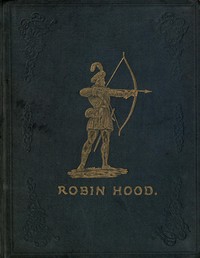
Robin Hood and His Merry Foresters — Themes and Context
(0 User reviews)
2021
Project Gutenberg
2021
Not confirmed
Kings and rulers -- Juvenile fiction; Clergy -- Juvenile fiction; Outlaws -- Juvenile fiction; Sheriffs -- Juvenile fiction; Robin Hood (Legendary character) -- Juvenile fiction; Archery -- Juvenile fiction; Sherwood Forest (England) -- Juvenile fiction
Readers of public-domain and historical texts
Project Gutenberg digital edition
en
Edition facts
Words
33,063
Reading time
144 min
Text sections
9
This digital edition of Robin Hood and His Merry Foresters — Themes and Context is described by source-level measurements including 33,063 words, 2 hr 24 min estimated reading time, and 9 detected text sections.
The text analysis averages about 22.7 words per sentence, while the detected sections provide another way to judge how the source is divided.
Project Gutenberg metadata also associates the work with “Kings and rulers -- Juvenile fiction,” connecting these edition facts with the source record’s subject description.
Source:
Project Gutenberg record #66169
This editorial note examines how the opening frame narrative, the episodic structure, and the illustrated scenes in Joseph Cundall's 1841 retelling of Robin Hood guide a first reading, focusing on the interplay between the boyhood narrator's nostalgia and the outlaw adventures.
Editorial Edition Score
4.7/5
★★★★★
★★★★★
Calculated from edition completeness, EPUB availability, text structure and catalogue metadata. Not a user rating.
How this score is calculated
- Description quality20 pts
- Title & short description10 pts
- Source metadata20 pts
- Text length15 pts
- Chapters / structure15 pts
- EPUB file integrity20 pts
Total of 100 points, scaled to a 2.5-5.0 range. Editions with an empty description or a missing EPUB file are not scored.
Edition quality
Read the Text
s his path, and many a young fawn skipped playfully at his side, and then bounded into the recesses of the forest. At another time the outlaw’s keen arrow would have followed them, but now he smiled at their merry gambols, and charmed with the loveliness of the scene, he rested upon his bow, and contemplated with heart-felt pleasure the tranquil beauty of the morn. He continued thus, absorbed in meditation, when suddenly a distant sound broke upon the stillness of the air.
“The outlaw listened for a moment. ‘’Tis the tramp of horses,’ he whispered to himself; and stepping to a tree, quick as thought he climbed amid its branches. Thence he could plainly distinguish the glitter of spear-heads and bright helmets, and scarce had he secured himself from observation, when several horsemen, followed by a troop of soldiers, passed within a few yards of his hiding-place. In the leader, Robin Hood at once recognised his old friend, the sheriff of Nottingham, who he had no doubt was now come with his men to seek for the traitorous butcher of Sherwood.
“It was not till some time after this little band had gone by that the outlaw ventured to descend the tree; and then, striking into a narrow path, he endeavoured to retrace his steps to the spot where his men were dwelling. On his way he was obliged to cross the high road, where a stranger arrested his steps.
“‘Hast thou seen the sheriff of Nottingham in the forest?’ he inquired.
“‘Aye, my good fellow, and with a fine band at his tail,’ replied Robin Hood. ‘Art thou seeking him?’
“‘Not him,’ returned the stranger, who was a bold yeoman, dressed in a coat of the untanned skin of some wild beast, and who carried a bow in his hand, and a sword and dagger at his side. ‘I seek not the sheriff, but him whom he seeks.’
“‘And who may that be?’ said the forester, at the same time forming a pretty shrewd guess.
“‘A man they call Robin Hood,’ answered the stranger. ‘If thou canst show me where he is, this purse shall be thine;’ and taking a well-filled leathern bag from his girdle, he rattled the contents together.
“‘Come with me, my friend, and thou shalt soon see Robin Hood,’ returned the outlaw. ‘But thou hast a brave bow; wilt thou not try thy skill with me in archery?’ The stranger at once consented. Robin Hood with his dagger cut down the branch of a tree, and fixing it in the earth, suspended upon the top a little garland, which he entwined with the long grass. The archers took their station at the distance of three hundred yards, and the stranger drew the first bow. His arrow flew past the mark far too high. The outlaw next bent his weapon, and shot within an inch or two of the stick. Again the yeoman essayed; and this time his shaft flew straight and passed through the garland; but Robin Hood stepped up boldly, and drawing his arrow to the very head, shot it with such vehemence that it clave the branch into two pieces, and still flew onwards for some yards.
“‘Give me thy hand,’ cried the stranger,—‘thou’rt the bravest bowman I’ve seen for many a day, an thy heart be as true as thy aim, thou art a better man than Robin Hood. What name bearest thou?’
“‘Nay—first tell me thine,’ replied Robin, ‘and then by my faith I will answer thee.’
“‘They call me Guy of Gisborne,’ rejoined the yeoman. ‘I’m one of the king’s rangers; and am sworn to take that outlawed traitor, Robin Hood.’
“‘He’s no traitor, sirrah,’ returned the forester angrily; ‘and cares as much for thee as for the beast whose skin thou wearest. I am that outlaw whom thou seek’st,—I am Robin Hood:’ and in a moment his drawn sword was in his hand.
“‘That’s for thee then,’ cried the yeoman, striking fiercely. ‘Five hundred pounds are set upon thine head, and if I get it not I’ll lose mine own.’
The book begins not with Robin Hood but with a first-person narrator recalling his schoolboy enthusiasm for old ballads read in a rustic arbour. This framing device, unique to Cundall's version, establishes a nostalgic tone that colours the subsequent tales. The narrator describes how he would read aloud to weary playmates until the school-bell rang, suggesting that the stories are meant to be shared orally. The table of contents reveals a structure of six evening or half-holiday meetings, each containing several episodes, such as “Robin Hood and the Butcher” or “The Bishop of Hereford.” This episodic arrangement, paired with eight full-page illustrations by John Gilbert, invites a reader to dip in and out, much like the original ballad collection the narrator cherished.
The Frame Narrative as Reading Guide
The opening pages present a fictionalised reader—the boy Stephen Percy—whose love for Robin Hood ballads mirrors the intended audience's likely experience. The narrator specifies that his volume of old ballads was “a volume of old ballads that chance had thrown before me,” emphasising serendipitous discovery. This frame reappears only briefly in the excerpts, but it sets expectations: the stories are filtered through a child's wonder, not presented as historical fact. For a first reader, this signals that the book prioritises entertainment and moral simplicity over gritty realism. The narrator's admission that he preferred reading to cricket or leap-frog also aligns the book with quiet, imaginative engagement rather than boisterous action.
Episodic Structure and Pacing
The table of contents lists six meetings, each containing multiple short episodes: for instance, “Our Second Meeting” includes Allen-a-Dale’s Marriage, The Monks’ Prayer, Robin Hood and the Ranger, and four other incidents. This structure means that no single conflict dominates; instead, the narrative moves briskly from one encounter to the next. The excerpt from the bishop episode shows how each scene has a clear arc: a feast, a trick, a revelation of treasure, and a humiliating departure. The bishop is forced to dance until he collapses, then placed backwards on his horse. Such set pieces are self-contained, making the book suitable for reading aloud in segments. A first reader should expect rapid shifts in tone, from comic humiliation to archery contests to combat, without extended transitions.
Illustrations as Narrative Anchors
John Gilbert’s eight plates, listed after the contents, are placed at key moments: “Marriage of Allen-a-Dale” as frontispiece, “The Foresters’ Welcome” early on, and “The Golden Arrow” and “The Outlaws’ Allegiance” near the end. The excerpt includes the caption for “The Bishop of Hereford,” showing that the illustrations capture dramatic tableaux—the bishop at table, the treasure being opened. These images serve as visual summaries of each episode’s climax. For a first reader, the plates offer a way to preview the story’s highlights; the frontispiece, for instance, immediately introduces the theme of marriage and community. The lithographic style, credited to Day & Haghe, gives the illustrations a formal, almost historical quality that contrasts with the playful text.
Voice and Dialogue in the Excerpts
The bishop episode reveals a consistent voice: the outlaws speak in a bluff, direct manner (“Lend me thy purse, good bishop,” cries Little John), while the bishop shifts from hearty to meek. Robin Hood himself uses courtly irony, telling the bishop to “fancy that thou art distributing this gold in alms.” The narrator’s prose is formal but laced with humour, as when the bishop “swore that he was a jovial fellow” just before his treasure is seized. Dialogue is often punctuated by physical comedy—the bishop “stopping short in his song” when he sees his mule being unloaded. A first reader should note that the outlaws are never truly cruel; they release the bishop’s retinue unharmed and only detain the mules as payment. This moral leniency is typical of the Robin Hood tradition and shapes the book’s tone as mischievous rather than violent.
Because the excerpts do not include the later chapters, a first reader cannot assess how the book handles Robin Hood’s death or pardon, which the contents list mentions. However, the consistent pattern of episodic feasting, trickery, and escape suggests that the narrative maintains a light-hearted, almost theatrical quality throughout. Readers familiar with other Robin Hood versions will notice that Cundall’s frame narrator adds a layer of wistfulness, as if the stories are already distant memories. Approaching the book as a collection of linked performances—each with its own illustration and moral—will likely yield the most satisfying experience.
That rainy afternoon, under Cundall's sentimental frames, I kept noticing how the foresters mourned their lost green wilds—nostalgia lingering even in triumph. It felt familiar, that ache for something gone. Later, flicking through another volume for no reason, I found the same quiet longing in The white doe — Background and Themes, where a deer carries a kingdom's sorrow across the water.
There are no reviews for this eBook.
There are no comments for this eBook.
Reader reflection
What did you think of this book?
Answer a few questions and save a private reflection on this device.
Your progress
0
/
10
2
How much did you enjoy the reading experience?
3
Would you pass this book on to a friend?
4
How demanding did the text feel?
5
What did you think about the pace?
6
How valuable was this book for your own interests?
7
Did the book deliver what you hoped for?
8
How strongly did the book affect you emotionally?
9
What is the main idea you are taking away?
10