Ancient Egyptian legends — A Closer Reading
Edition facts
The source record for Ancient Egyptian legends — A Closer Reading measures this digital text at 29,886 words, 2 hr 10 min estimated reading time, and 3 detected text sections.
The text analysis averages about 24.0 words per sentence, while the detected sections provide another way to judge how the source is divided.
Project Gutenberg metadata also associates the work with “Mythology, Egyptian,” connecting these edition facts with the source record’s subject description.
Calculated from edition completeness, EPUB availability, text structure and catalogue metadata. Not a user rating.
How this score is calculated
- Description quality20 pts
- Title & short description10 pts
- Source metadata20 pts
- Text length15 pts
- Chapters / structure15 pts
- EPUB file integrity20 pts
Total of 100 points, scaled to a 2.5-5.0 range. Editions with an empty description or a missing EPUB file are not scored.
Read the Text
tshepsut was she called, Chief of Noble Women, divine of Diadems, favourite of the Goddesses, beloved of Amon-Ra. And to her the Gods granted that she should be mistress of all lands within the circuit of the sun, and that she should appear as king upon the throne of Horus before the glories of the Great House. And upon her was the favour of Amon-Ra for ever.
Now Ahura was the wife of Nefer-ka-ptah, and their child was Merab; this was the name by which he was registered by the scribes in the House of Life. And Nefer-ka-ptah, though he was the son of the King, cared for naught on earth but to read the ancient records, written on papyrus in the House of Life or engraved on stone in the temples; all day and every day he studied the writings of the ancestors.
One day he went into the temple to pray to the Gods, but when he saw the inscriptions on the walls he began to read them; and he forgot to pray, he forgot the Gods, he forgot the priests, he forgot all that was around him until he heard laughter behind him. He looked round and a priest stood there, and from him came the laughter.
"Why laughest thou at me?" said Nefer-ka-ptah.
"Because thou readest these worthless writings," answered the priest. "If thou wouldest read writings that are worth the reading I can tell thee where the Book of Thoth lies hidden."
Then Nefer-ka-ptah was eager in his questions, and the priest replied, "Thoth wrote the Book with his own hand, and in it is all the magic in the world. If thou readest the first page, thou wilt enchant the sky, the earth, the abyss, the mountains, and the sea; thou wilt understand the language of the birds of the air, and thou wilt know what the creeping things of earth are saying, and thou wilt see the fishes from the darkest depths of the sea. And if thou readest the other page, even though thou wert dead and in the world of ghosts, thou couldest come back to earth in the form thou once hadst. And besides this, thou wilt see the sun shining in the sky with the full moon and the stars, and thou wilt behold the great shapes of the Gods."
Then said Nefer-ka-ptah, "By the life of Pharaoh, that Book shall be mine. Tell me whatsoever it is that thou desirest, and I will do it for thee."
"Provide for my funeral," said the priest. "See that I am buried as a rich man, with priests and mourning women, offerings, libations, and incense. Then shall my soul rest in peace in the Fields of Aalu. One hundred pieces of silver must be spent upon my burying."
Then Nefer-ka-ptah sent a fleet messenger to fetch the money, and he paid one hundred pieces of silver into the priest's hands. When the priest had taken the silver, he said to Nefer-ka-ptah:
"The Book is at Koptos in the middle of the river. In the middle of the river is an iron box, In the iron box is a bronze box, In the bronze box is a keté-wood box, In the keté-wood box is an ivory-and-ebony box, In the ivory-and-ebony box is a silver box, In the silver box is a gold box, And in the gold box is the Book of Thoth.
Round about the great iron box are snakes and scorpions and all manner of crawling things, and above all there is a snake which no man can kill. These are set to guard the Book of Thoth."
When the priest had finished speaking, Nefer-ka-ptah ran out of the temple, for his joy was so great that he knew not where he was. He ran quickly to find Ahura to tell her about the Book and that he would go to Koptos and find it.
But Ahura was very sorrowful, and said, "Go not on this journey, for trouble and grief await thee in the Southern Land."
She laid her hand upon Nefer-ka-ptah as though she would hold him back from the sorrow that awaited him. But he would not be restrained, and broke away from her and went to the King his father.
He told the King all that he had learned, and said, "Give me the royal barge, O my father, that I may go to the Southern Land with my wife Ahura and my son Merab. For the Book of Thoth I must and will have."
So the King gave orders and the royal barge was prepared, and in it Nefer-ka-ptah, Ahura, and Merab sailed up the river to the Southern Land as far as Koptos. When they arrived at Koptos, the high priest and all the priests of Isis of Koptos came down to the river to welcome Nefer-ka-ptah, Ahura, and Merab. And they went in a great procession to the temple of the Goddess, and Nefer-ka-ptah sacrificed an ox and a goose and poured a libation of wine to Isis of Koptos and her son Harpocrates. After this, the priests of Isis and their wives made a great feast for four days in honour of Nefer-ka-ptah and Ahura.
On the morning of the fifth day, Nefer-ka-ptah called to him a priest of Isis, a great magician learned in all the mysteries of the Gods. And together they made a little magic box, like the cabin of a boat, and they made men and a great store of tackle, and put the men and the tackle in the magic cabin. Then they uttered a spell over the cabin, and the men breathed and were alive, and began to use the tackle. And Nefer-ka-ptah sank the magic cabin in the river, saying, "Workmen, workmen! Work for me!" And he filled the royal barge with sand and sailed away alone, while Ahura sat on the bank of the river at Koptos, and watched and waited, for she knew that sorrow must come of this journey to the Southern Land.
The magic men in the magic cabin toiled all night and all day for three nights and three days along the bottom of the river; and when they stopped the royal barge stopped also, and Nefer-ka-ptah knew that he had arrived where the Book lay hidden.
He took the sand out of the royal barge and threw it into the water, and it made a gap in the river, a gap of a schoenus long and a schoenus wide; in the middle of the gap lay the iron box, and beside the box was coiled the great snake that no man can kill, and all around the box on every side to the edge of the walls of water were snakes and scorpions and all manner of crawling things.
Then Nefer-ka-ptah stood up in the royal barge, and across the water he cried to the snakes and scorpions and crawling things; a loud and terrible cry, and the words were words of magic. As soon as his voice was still, the snakes and scorpions and crawling things were still also, for they were enchanted by means of the magical words of Nefer-ka-ptah, and they could not move. Nefer-ka-ptah brought the royal barge to the edge of the gap, and he walked through the snakes and scorpions and crawling things, and they looked at him, but could not move because of the spell that was on them.
And now Nefer-ka-ptah was face to face with the snake that no man could kill, and it reared itself up ready for battle. Nefer-ka-ptah rushed upon it and cut off its head, and at once the head and body came together, each to each, and the snake that no man could kill was alive again, and ready for the fray. Again Nefer-ka-ptah rushed upon it, and so hard did he strike that the head was flung far from the body, but at once the head and body came together again, each to each, and again the snake that no man could kill was alive and ready to fight. Then Nefer-ka-ptah saw that the snake was immortal and could not be slain, but must be overcome by subtle means. Again he rushed upon it and cut it in two, and very quickly he put sand on each part, so that when the head and body came together there was sand between them and they could not join, and the snake that no man could kill lay helpless before him.
Then Nefer-ka-ptah went to the great box where it stood in the gap in the middle of the river, and the snakes and scorpions and crawling things watched, but they could not stop him.
He opened the iron box and found a bronze box, He opened the bronze box and found a keté-wood box, He opened the keté-wood box and found an ivory-and-ebony box, He opened the ivory-and-ebony box and found a silver box, He opened the silver box and found a gold box, He opened the gold box and found the Book of Thoth.
He opened the Book and read a page, and at once he had enchanted the sky, the earth, the abyss, the mountains, and the sea, and he understood the language of birds, fish, and beasts. He read the second page and he saw the sun shining in the sky, with the full moon and the stars, and he saw the great shapes of the Gods themselves; and so strong was the magic that the fishes came up from the darkest depths of the sea. So he knew that what the priest had told him was true.
Then he thought of Ahura waiting for him at Koptos, and he cast a magic spell upon the men that he had made, saying "Workmen, workmen! Work for me! and take me back to the place from which I came." They toiled day and night till they came to Koptos, and there was Ahura sitting by the river, having eaten nothing and drunk nothing since Nefer-ka-ptah went away. For she sat waiting and watching for the sorrow that was to come upon them.
But when she saw Nefer-ka-ptah returning in the royal barge, her heart was glad and she rejoiced exceedingly. Nefer-ka-ptah came to her and put the Book of Thoth into her hands and bade her read it. When she read the first page, she enchanted the sky, the earth, the abyss, the mountains, and the sea, and she understood the language of birds, fish, and beasts; and when she read the second page, she saw the sun shining in the sky, with the full moon and the stars, and she saw the great shapes of the Gods themselves; and so strong was the magic that the fishes came up from the darkest depths of the sea.
Nefer-ka-ptah now called for a piece of new papyrus and for a cup of beer; and on the papyrus he wrote all the spells that were in the Book of Thoth. Then he took the cup of beer and washed the papyrus in the beer, so that all the ink was washed off and the papyrus became as though it had never been written on. And Nefer-ka-ptah drank the beer, and at once he knew all the spells that had been written on the papyrus, for this is the method of the great magicians.
Then Nefer-ka-ptah and Ahura went to the temple of Isis and gave offerings to Isis and Harpocrates, and made a great feast, and the next day they went on board the royal barge and sailed joyfully away down the river towards the Northern Land.
But behold, Thoth had discovered the loss of his Book, and Thoth raged like a panther of the South, and he hastened before Ra and told him all, saying, "Nefer-ka-ptah has found my magic box and opened it, and has stolen my Book, even the Book of Thoth; he slew the guards that surrounded it, and the snake that no man can kill lay helpless before him. Avenge me, O Ra, upon Nefer-ka-ptah, son of the King of Egypt."
The Majesty of Ra answered and said, "Take him and his wife and his child, and do with them as thou wilt." And now the sorrow for which Ahura watched and waited was about to come upon them, for Thoth took with him a Power from Ra to give him his desire upon the stealer of his Book.
As the royal barge sailed smoothly down the river, the little boy Merab ran out from the shade of the awning and leaned over the side watching the water. And the Power of Ra drew him, so that he fell into the river and was drowned. When he fell, all the sailors on the royal barge and all the people walking on the river-bank raised a great cry, but they could not save him. Nefer-ka-ptah came out of the cabin and read a magical spell over the water, and the body of Merab came to the surface and they brought it on board the royal barge. Then Nefer-ka-ptah read another spell, and so great was its power that the dead child spoke and told Nefer-ka-ptah all that had happened among the Gods, that Thoth was seeking vengeance, and that Ra had granted him his desire upon the stealer of his Book.
Nefer-ka-ptah gave command, and the royal barge returned to Koptos, that Merab might be buried there with the honour due to the son of a prince. When the funeral ceremonies were over, the royal barge sailed down the river towards the Northern Land. A joyful journey was it no longer, for Merab was dead, and Ahura's heart was heavy on account of the sorrow that was still to come, for the vengeance of Thoth was not yet fulfilled.
They reached the place where Merab had fallen into the water, and Ahura came out from under the shade of the awning, and she leaned over the side of the barge, and the Power of Ra drew her so that she fell into the river and was drowned. When she fell, all the sailors in the royal barge and all the people walking on the river-bank raised a great cry, but they could not save her. Nefer-ka-ptah came out of the cabin and read a magical spell over the water, and the body of Ahura came to the surface, and they brought it on board the royal barge. Then Nefer-ka-ptah read another spell, and so great was its power that the dead woman spoke and told Nefer-ka-ptah all that had happened among the Gods, that Thoth was still seeking vengeance, and that Ra had granted him his desire upon the stealer of his Book.
Nefer-ka-ptah gave command and the royal barge returned to Koptos, that Ahura might be buried there with the honour due to the daughter of a king. When the funeral ceremonies were over, the royal barge sailed down the river towards the Northern Land. A sorrowful journey was it now, for Ahura and Merab were dead, and the vengeance of Thoth was not yet fulfilled.
They reached the place where Ahura and Merab had fallen into the water, and Nefer-ka-ptah felt the Power of Ra drawing him. Though he struggled against it he knew that it would conquer him. He took a piece of royal linen, fine and strong, and made it into a girdle, and with it he bound the Book of Thoth firmly to his breast, for he was resolved that Thoth should never have his Book again.
Then the Power drew him yet more strongly, and he came from under the shade of the awning and threw himself into the river and was drowned. When he fell, all the sailors of the royal barge and all the people walking on the river-bank raised a great cry, but they could not save him. And when they looked for his body they could not find it. So the royal barge sailed down the river till they reached the Northern Land and came to Memphis, and the chiefs of the royal barge went to the King and told him all that had happened.
The King put on mourning raiment; he and his courtiers, the high priest and all the priests of Memphis, the King's army and the King's household, were clothed in mourning apparel, and they walked in procession to the haven of Memphis to the royal barge. When they came to the haven, they saw the body of Nefer-ka-ptah floating in the water beside the barge, close to the great steering-oars. And this marvel came to pass because of the magical powers of Nefer-ka-ptah; even in death he was a great magician by reason of the spells he had washed off the papyrus and drunk in the beer.
Then they drew him out of the water, and they saw the Book of Thoth bound to his breast with the girdle of royal linen. And the King gave command that they should bury Nefer-ka-ptah with the honour due to the son of a king, and that the Book of Thoth should be buried with him.
Thus was the vengeance of Thoth fulfilled, but the Book remained with Nefer-ka-ptah.
In the beginning Ra cursed Nut, and his curse was that none of her children should be born on any day of any year. And Nut cried to Thoth who loved her, Thoth, the twice great, god of magic and learning and wisdom, he whom the Greeks called Hermes Trismegistos. Though the curse of the great God Ra once uttered could never be recalled, Thoth by his wisdom opened a way of escape. He went to the Moon-god, whose brightness was almost equal to that of the Sun itself, and challenged him to a game of dice. Great were the stakes on either side, but the Moon's were the greatest, for he wagered his own light. Game after game they played and always the luck was with Thoth, till the Moon would play no more. Then Thoth, the twice great, gathered up the light he had won, and by his power and might he formed it into five days. And since that time the Moon has not had light enough to shine throughout the month; but dwindles away into darkness, and then comes slowly to his full glory; for the light of five whole days was taken from him. And these five days Thoth placed between the end of the old year and the beginning of the new year, keeping them distinct from both; and on these five days the five children of Nut were born; Osiris on the first day, Horus on the second, Set on the third, Isis on the fourth, and Nephthys on the fifth. Thus the curse of Ra was both fulfilled and made of no effect, for the days on which the children of Nut were born belonged to no year.
When Osiris was born, wonders and marvels, prodigies and signs, were heard and seen throughout the world, for a voice cried over the whole earth, "The Lord of all comes forth to the light." And a woman drawing water from the holy place of the temple was filled with the divine afflatus and rushed forth crying, "Osiris the King is born."
Now Egypt was a barbarous country where men fought together and ate human flesh; naught did they know of the gods, lawless were they and savage. But Osiris became the King of Egypt, and he showed his people how to till the land and to plant corn and the vine, and he taught them the honour due to the Gods, and made laws, and abolished their barbarous and savage customs. Wherever he went, the people bowed at his feet, for they loved the very ground he trod on; and whatever he commanded, that they did. Thus did Osiris rule over the Egyptians till, with music playing and banners flying, he passed out of Egypt to bring all nations beneath his gracious sway.
But Set hated his brother Osiris, and he gathered to himself seventy-two conspirators, and with them was Aso, queen of Ethiopia. And they made a plan that when Osiris returned they should kill him and place Set on the throne; but they hid their plans, and with smiling faces went out to meet Osiris when he re-entered Egypt in triumph.
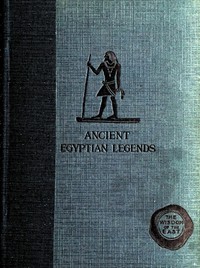
Margaret Alice Murray's Ancient Egyptian Legends (1913) retells stories drawn from hieroglyphic texts and papyri, aiming to present them to a general audience. In her preface, Murray states she has 'adhered strictly to the story, but arrang[ed] the words and phrases according to the English method,' while retaining Egyptian metaphors. The collection includes eleven legends, from 'The Princess and the Demon' to 'The Regions of Night and Thick Darkness,' followed by notes on sources and translations.
The catalog subjects—Mythology, Egyptian and Legends—Egypt—accurately describe the content, but the excerpts reveal a work that is more than a simple retelling. Murray's editorial choices, such as inserting sentences for clarity and arranging stories in her own sequence, shape the reader's experience. The legends themselves feature vivid, ritualistic language, as in the hymn to Horus after his victory over Set, where priests and women chant in triumph.
Murray's Method: Retelling with Fidelity and Adaptation
Murray's preface clarifies her approach: she adheres strictly to the story but adapts phrasing to English conventions, inserting whole sentences where the narrative divides naturally—as in 'The Battles of Horus' and 'The Regions of Night and Thick Darkness.' This repetition, she notes, is 'quite in accordance with the style of Egyptian literature.' The excerpts confirm this: in 'The Battles of Horus,' the hymn repeats epithets like 'Horus the Avenger' and actions such as harpooning the hippopotamus, creating a liturgical rhythm. Murray also provides notes at the end, giving the origin of each legend and references to scholarly translations, balancing accessibility with academic rigor.
The Role of Repetition and Ritual in the Legends
The excerpts show that repetition is not merely a stylistic tic but a structural element. In 'The Beer of Heliopolis,' the phrase 'the great god Nun, whose dwelling is in the waters of the sky' appears twice in close succession, reinforcing the god's cosmic role. The hymn in 'The Battles of Horus' uses parallel clauses: 'Rejoice, O women of Busiris! Rejoice, O women of Pé!' and later 'Eat ye the flesh of the vanquished, drink ye his blood.' This incantatory style mirrors Egyptian ritual texts, where repetition invokes divine power. Murray preserves this feature, allowing readers to sense the oral and ceremonial origins of the stories.
The Catalog Subject vs. The Text's Actual Focus
The catalog lists 'Mythology, Egyptian' and 'Legends -- Egypt,' which are accurate but broad. The excerpts, however, reveal a narrower focus: the legends center on the gods Osiris, Ra, and Horus, with particular attention to conflicts and cosmic order. 'The Beer of Heliopolis' describes Ra's aging and his secret council with the gods, while 'The Battles of Horus' culminates in Set's death by harpoon. Mummies are mentioned only in the Duat, as Murray notes in her preface. The book does not cover all Egyptian mythology but selects stories that highlight divine kingship, vengeance, and the cycle of death and rebirth. The notes, though not excerpted, likely provide the scholarly context that the general reader might miss.
Readers should note that Murray's sequence is her own—she groups legends of miscellaneous gods first, then Osiris and his circle, and finally Ra. The notes at the end are essential for understanding the sources, as they cite the original texts and modern translations. This edition preserves the 1920 reprint, with its original dedication 'To my students, past and present.' For those interested in how early 20th-century Egyptologists popularized ancient myths, Murray's work offers a clear example of scholarly translation adapted for a lay audience.
Reading Margaret Murray’s retellings of Ra’s weary journeys, I kept thinking of how every god carried a flower or a tree as a quiet signature. That same patient reverence for green things lives in Plant Lore, Legends, and Lyrics Embracing the Myths, Traditions, Superstitions, and Folk-Lore of the Plant Kingdom — Reading Companion, where even the humblest herb hides a story worth lingering over.
Benjamin Adams
1 week agoLiam Martinez
2 weeks agoMila Smith
2 weeks agoAria Hall
4 weeks agoHow did this book work for you?
Your answers remain private and are stored only in this browser.
Lucas Ramirez
2 weeks ago