1

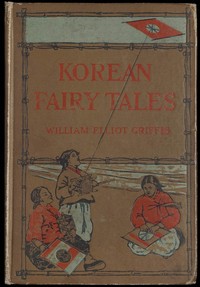
Korean Fairy Tales — Reading Companion
(0 User reviews)
2262
Project Gutenberg
2022
Not confirmed
Fairy tales -- Korea
Readers of public-domain and historical texts
Project Gutenberg digital edition
en
Edition facts
Words
51,492
Reading time
224 min
Text sections
28
Before opening Korean Fairy Tales — Reading Companion, the edition data offers a quick orientation: 51,492 words, 3 hr 44 min estimated reading time, and 28 detected text sections.
The text analysis averages about 20.9 words per sentence, while the detected sections provide another way to judge how the source is divided.
Project Gutenberg metadata also associates the work with “Fairy tales -- Korea,” connecting these edition facts with the source record’s subject description.
Source:
Project Gutenberg record #67180
This editorial note examines the structural patterns, recurring animal imagery, and movement between domestic and wild spaces in William Elliot Griffis's collection of Korean fairy tales, drawing on excerpts from 'The Unmannerly Tiger,' 'Pigling and Her Proud Sisters,' and 'The Mirror that Made Trouble.'
Editorial Edition Score
4.9/5
★★★★★
★★★★★
Calculated from edition completeness, EPUB availability, text structure and catalogue metadata. Not a user rating.
How this score is calculated
- Description quality20 pts
- Title & short description10 pts
- Source metadata20 pts
- Text length15 pts
- Chapters / structure15 pts
- EPUB file integrity20 pts
Total of 100 points, scaled to a 2.5-5.0 range. Editions with an empty description or a missing EPUB file are not scored.
Edition quality
Read the Text
imming around in the waters outside his palace, the king of the fishes saw something hanging in the water that looked as if it were good to eat. So at once His Majesty gulped it down, when, oh horrors! he found he had barely escaped swallowing a fish hook, which stuck fast in his gills. It had been baited by some fishermen up in a boat on the sea top. When the king of the fishes found the dreadful thing in his mouth, he jerked himself away. The line broke but the hook remained, giving the king a fever and much pain.
How to get the iron out and heal His Majesty was now the question. All the wise creatures in the ocean, from the turtle to the gudgeon and from the tittleback to the whale, were summoned to the palace to see what could be done. Many a sage noddle was bent, and eye blinked and fin wagged, as the marine doctors talked the matter over in the council. The turtle was considered the most learned and expert of them all. Many were his feelings of the king’s pulse and his looking down into his throat, before Dr. Turtle would pronounce what was the real trouble or write a prescription for his patient. Finally, after consultation with the other doctors that had fins and tails, or were in scales and shell, it was decided that nothing less than a poultice made of rabbits’ eyes would loosen the hook and end His Majesty’s troubles.
So Dr. Turtle was ordered to go to the seashore and invite a rabbit to come down into the world under the sea, that they might make a poultice of his eyes and apply the warm mess to the king’s throat.
Arriving on the sea beach, at the foot of a high hill, Dr. Turtle, looking far up, found Mr. Rabbit out of his burrow and taking a promenade along the edge of the forest. Forthwith Dr. Turtle waddled across the beach and part way up the hill, climbing hard, until he began to puff and blow. He had enough breath left, however, to salute Brother Bunny with a good-morning. Very politely the rabbit returned the greeting.
“It’s a hot day,” said Dr. Turtle, as he pulled out his handkerchief, wiped his horny forehead, and cleaned the sand out of his claws.
“Yes, but the scenery is so fine, Dr. Turtle, that you must be glad you’re out of the water to see such lovely mountains. Don’t you think Korea is a fine country? There is no land in the world so beautiful as ours. The mountains, the rivers, the seashore, the forests, the flowers——”
If Dr. Turtle had let the rabbit run on, praising his own country, he would have forgotten his errand; but, thinking of His Majesty, the suffering fish king, with the cruel hook in his mouth, Dr. Turtle interrupted Bunny, saying:
“Oh, yes, Brother Bunny, this view of the landscape and country is all very beautiful, but it can’t compare to the gems and jewels, trees and flowers, sweet odors and everything lovely down in the world under the sea.”
At this, the rabbit pricked up his ears. It was all new to him. He had never heard that there was anything under the water but common fishes and seaweed and when these were decayed and washed up along the seashore—well, he had his ideas about them. They did not smell sweet at all. Now he heard a different story. His curiosity was roused. “What you tell me, my friend, is interesting. Go on.”
Thereupon Dr. Turtle proceeded to tell of most wonderful mountains and valleys down on the floor of the deep sea, with every kind of rare water plants, red, orange-color, green, blue, white, with trees of gold and silver, besides flowers of every color and delightful perfume.
“You surprise me,” said Brother Bunny, getting more interested.
“Yes, and all sorts of good things to eat and drink, with music and dancing, handsome serving maids and everything nice. Come along and be our guest. Our king has sent me to invite you.”
“May I go?” asked Brother Bunny, delighted.
“Yes, at once. Get on my back and I’ll carry you.”
So the rabbit ran and the turtle waddled to the water’s edge.
“Now hold fast to my front shell,” said Dr. Turtle; “we’re going under the water.”
Down, down below the blue waves they sank until they arrived at the king’s palace. There the rabbit found everything was true, as told by the turtle. The colors, the rich gems were as he had said.
In Korean Fairy Tales, William Elliot Griffis presents a collection that repeatedly moves between the domestic sphere and the untamed Korean landscape, a structural pattern evident even in the excerpts. The tiger, addressed as 'Mountain Uncle,' embodies the wild, while characters like Pigling traverse from kitchen drudgery to forest feasts. This oscillation between safety and danger, order and chaos, forms a core rhythm of the tales.
The Tiger as a Recurring Figure
The tiger appears not merely as a predator but as a complex figure with social attributes. In 'The Unmannerly Tiger,' the creature is named 'Mountain Uncle' by villagers, a title that suggests familiarity and respect despite its danger. The tiger boasts of evading hunters and traps, indicating a cunning intelligence. This anthropomorphic treatment recurs, as seen in the illustration caption 'The tiger climbed up and out,' which implies agency and narrative importance. The tiger's presence often signals a boundary crossing between human and animal realms.
Movement Between Domestic and Wild Spaces
Many tales in the excerpts hinge on a character's journey from home into nature. In 'Pigling and Her Proud Sisters,' the protagonist follows a black cow into the woods, where she finds 'the most delicious fruit.' This movement is rewarded, while her stepsister's similar attempt leads to a swamp, brambles, and ruin. The contrast underscores a moral geography: the kind-hearted character navigates the wild successfully, while the selfish one suffers. The domestic space is often a site of labor and oppression, while the forest offers liberation or danger.
Material Culture and Symbolic Objects
Objects in these tales carry symbolic weight. In 'Pigling and Her Proud Sisters,' the black cow is both a helper and a test; later, an earthen figure of the cow stands in the bride's boudoir, linking domestic happiness to the wild encounter. The mirror in 'The Mirror that Made Trouble' (though the excerpt is cut short) suggests another object that disrupts social order. These items are not mere props but catalysts for plot and moral lessons, often bridging the human and natural worlds.
Structure and Narrative Rhythm
The tales follow a pattern of departure, trial, and return, often with a wedding or reward as closure. 'Pigling' moves from kitchen to festival to forest to marriage, each shift marked by clear transitions. The excerpts show a preference for episodic structure, with distinct scenes: the tiger's boast, the cow's appearance, the wedding procession. This rhythm, combined with vivid sensory details like 'honey candy' and 'roasted chestnuts,' creates a world that is both fantastical and grounded in Korean material life.
Readers approaching Korean Fairy Tales will find a collection where the boundary between human and animal, domestic and wild, is constantly negotiated. Pay attention to how characters move through these spaces and what objects accompany them. The tales reward careful observation of recurring motifs, from tigers to pear trees, that weave through the narratives.
Reading the notes on Griffis’ tigers prowling between village and forest made me think of how stories shift shape when we cross borders. That same quiet unease lingered in Grimm Tales Made Gay — Text and Context, where familiar shadows soften into something tender. I kept remembering how both collections let wildness whisper into ordinary rooms, long after the page turned.
There are no reviews for this eBook.
There are no comments for this eBook.
Reader reflection
How will you remember this book?
Save your reaction, strongest insight, and memorable passage.
Your progress
0
/
10
2
What was your overall reaction to the book?
3
Would you encourage someone else to read it?
4
What was the reading difficulty like?
5
How useful did the reading feel?
6
How strong was your personal connection to the text?
7
Do you expect to return to this book?
8
Did the book offer a fresh perspective?
9
What did this book teach you most?
10