1


Momotaro; or, Little Peachling Japanese Fairy Tale Series No. 1 — Edition Insights
(0 User reviews)
376
Project Gutenberg
2010
Not confirmed
Folklore -- Japan; Fairy tales -- Japan
Readers of public-domain and historical texts
Project Gutenberg digital edition
en
Edition facts
Words
3,808
Reading time
17 min
Text sections
1
The source record for Momotaro; or, Little Peachling Japanese Fairy Tale Series No. 1 — Edition Insights measures this digital text at 3,808 words, 17 min estimated reading time, and 1 detected text section.
The text analysis averages about 20.8 words per sentence, while the detected sections provide another way to judge how the source is divided.
Project Gutenberg metadata also associates the work with “Folklore -- Japan,” connecting these edition facts with the source record’s subject description.
Source:
Project Gutenberg record #33051
This editorial note examines how the catalog subjects 'Folklore -- Japan' and 'Fairy tales -- Japan' align with the actual text of Momotaro, noting the story's structure, the hero's characterization, and the cultural markers present in the excerpts.
Editorial Edition Score
4.4/5
★★★★★
★★★★★
Calculated from edition completeness, EPUB availability, text structure and catalogue metadata. Not a user rating.
How this score is calculated
- Description quality20 pts
- Title & short description10 pts
- Source metadata20 pts
- Text length15 pts
- Chapters / structure15 pts
- EPUB file integrity20 pts
Total of 100 points, scaled to a 2.5-5.0 range. Editions with an empty description or a missing EPUB file are not scored.
Edition quality
Public-domain source text
Read the source text
The source text is kept in the dedicated reader, separate from this catalogue record and its commentary.
The catalog subjects for this Project Gutenberg edition list 'Folklore -- Japan' and 'Fairy tales -- Japan,' but the excerpts reveal a text that is both a straightforward adventure tale and a cultural artifact. The story follows a familiar fairy-tale pattern: a childless couple finds a miraculous child, the child grows up strong, and he sets out on a quest. However, the specific details—such as the old woman washing clothes by the river and the child emerging from a peach kernel—ground the tale in Japanese tradition. The narrative voice is simple and direct, with little embellishment, suggesting a translation aimed at conveying the plot rather than literary flourish.
The Hero's Motivation and Character
Momotaro is portrayed as 'strong and enterprising' from childhood, and his decision to cross to the island of devils is presented as a personal ambition: he 'determined to cross over to the island of the devils, take their riches, and come back.' This goal is not framed as a moral duty but as a demonstration of strength. The old couple 'bestowed still more care on his education,' yet the text does not specify what that education entails. Momotaro's confidence is evident when he laughs at the defeated devil chief, saying 'Out with your riches then.' The hero's character is defined by action and directness, with no internal conflict or hesitation shown in the excerpts.
The Role of Companions and Gifts
Momotaro gains three animal companions—a dog, a monkey, and a pheasant—each of whom joins him in exchange for a millet dumpling. This exchange is transactional: the animals offer loyalty for food. The text notes that 'a dog came to the side of the way' and spoke, and similarly the monkey and pheasant appear and request dumplings. The companions are not given individual personalities or names; they function as a collective force. At the island, they 'broke through the front gate' together, with Momotaro first and his followers behind. The simplicity of this arrangement contrasts with more complex versions of the tale where the animals have distinct roles.
Cultural Markers and Translation Choices
The excerpts contain several cultural markers that align with the catalog subjects. The old woman uses a 'piece of bamboo' to retrieve the peach, a detail specific to Japanese material culture. The dumplings are explicitly 'Japanese millet dumplings,' and the devil chief is named 'Akandoji.' The phrase 'the tug of war' is an English idiom that may not have a direct equivalent in Japanese, suggesting the translator prioritized readability over literal fidelity. The story ends with Momotaro returning home 'rejoicing' with his riches, a conclusion that reinforces the fairy-tale pattern of reward for bravery. These elements together show how the text functions as both a Japanese folktale and a translated work adapted for an English-speaking audience.
Readers approaching this edition should note that the text is a translation from the early 20th century, likely intended for a Western audience. The story's brevity and directness make it accessible, but the cultural context—such as the significance of the peach or the nature of the devils—is not elaborated. Comparing this version with other translations or with Japanese-language variants may reveal how the tale has been adapted across cultures.
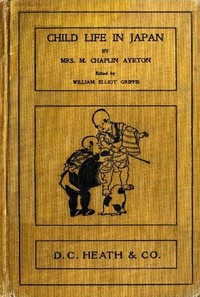
Reading how the catalog labels Momotaro as folklore reminded me of curling up with my grandmother’s yellowed copy, where the peach boy felt less like a fairy tale and more like a neighbor’s mischievous son. That same quiet familiarity surfaced in Child-Life in Japan and Japanese Child Stories — Background and Themes, where daily rituals made the fantastic feel tenderly ordinary.
There are no reviews for this eBook.
There are no comments for this eBook.
Reader reflection
Before you leave, reflect on the book
Use these questions to collect your thoughts before moving on.
Your progress
0
/
10
2
What was your overall reaction to the book?
3
Would you encourage someone else to read it?
4
How much effort did this book require?
5
What was its emotional impact?
6
Was the book easy to understand?
7
Would this book work well in a reading group?
8
Which aspect of the book did you value most?
9
Which lesson or insight stayed with you?
10