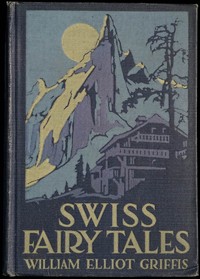
Swiss Fairy Tales — Background and Themes

(1 User reviews)   255
In Category - Fairy Tales
Griffis, William Elliot, 1843-1928, Carlson, George L., 1887-1962 [Illustrator] Project Gutenberg 2023
Fairy tales -- Switzerland Readers of public-domain and historical texts
Project Gutenberg digital edition en

Edition facts

Words 60,745
Reading time 265 min
Text sections 26

The source record for Swiss Fairy Tales — Background and Themes measures this digital text at 60,745 words, 4 hr 25 min estimated reading time, and 26 detected text sections.

The text analysis averages about 22.6 words per sentence, while the detected sections provide another way to judge how the source is divided.

Project Gutenberg metadata also associates the work with “Fairy tales -- Switzerland,” connecting these edition facts with the source record’s subject description.

This editorial note examines how William Elliot Griffis frames Swiss folklore through a Pennsylvania German lens, using the opening, middle, and later excerpts to show the collection's narrative voice, recurring motifs of dwarfs and fairies, and the blend of historical and fantastical elements.
Share
Editorial Edition Score 4.9/5

Calculated from edition completeness, EPUB availability, text structure and catalogue metadata. Not a user rating.

How this score is calculated
  • Description quality20 pts
  • Title & short description10 pts
  • Source metadata20 pts
  • Text length15 pts
  • Chapters / structure15 pts
  • EPUB file integrity20 pts

Total of 100 points, scaled to a 2.5-5.0 range. Editions with an empty description or a missing EPUB file are not scored.

Edition quality

Read the Text

al capital, he entertained members of Congress and the refugee French noblemen.

When the story teller heard the once little maids talk about things Swiss, and Hessian, and British, and Pennsylvanian, these three, two of whom the Hessians had once scared into the garret, were dear old ladies. Sitting up in bed, or in her chair, as straight as her rheumatism and her bent fingers would allow, grandmother told us many a tale of Swiss ancestral and Revolutionary times.

To the end of the years of her life, which lasted from 1770 to 1866, her sister Hannah, our maiden aunt, sang the songs, played on the piano the ditties, and danced the minuets and waltzes, which the French officers and noblemen had taught her when the Quaker city, from 1790 to 1800, was the national capital.

We children, even when big girls and boys, and ready for college, enjoyed the fun, the music, and the stories. It was from these dear old ladies that the story teller learned to love the mountains, and to climb them, in America and Japan, and, for weeks at a time, to tramp among them in glorious Switzerland.

The ancestral Swiss home was in a valley of the Bernese Oberland, under the shadow of a high mountain. In winter, which usually lasted seven months or more, the people, the boys, and the girls, the cows, goats, donkeys, horses, chickens, and all living things were shut in by heavy snows. Quite often in winter, daddy and the boys had to climb out the windows onto the snows that were piled, or drifted, many feet high against the door. Even on May day, spoiling fun outdoors, there might come a storm which left six or eight feet of snow.

Yet when the sun got up early in the morning, and the south wind blew with a quiet force that did more in a day’s work than a million steam shovels, the snow melted, and soon the green meadows were spangled with red and blue, yellow and white flowers.

When June came, the big boys got ready, with their fathers and hired men, to leave their village home, and go up to spend the whole summer on the spicy pastures, that is, the Alps, high up on the mountains, to stay until near October. There the bees would gather honey from the nectar in the blossoms, and cows would feed on the sweet juices of the grass. It was at this season that the milk, cream, butter and cheese, were the very best of the year. Many a growing boy, counting on his fingers the days, looked forward for months to life outdoors, on the highlands, among the birds, the butterflies and the wild animals. As for the cattle, they could sniff the sweet aroma of the flowery fields and grasses at a distance and long before men could.

The day of the great cow parade, when the other four-footed animals, dogs, goats, pigs, horses and donkeys, joining in, was the greatest of the year. Then the leading cow, named Lady, or Queenie, or Cleopatra, often carrying the milking stool on her head, between her horns, led the procession. The girls were all out in their best clothes to deck the hats of the daddies with wreaths and blossoms, and to say and wave good-byes. Pretty nearly every one was decorated with flowers.

Then the music and the yodel songs, and the blowing of the pine wood horns began. These awoke the echoes of the distant mountains. Then the sounds, returning, seemed as sweet as the singing by a choir of the heavenly host. No Swiss boy or girl, even when grown up, living in the cities, or in a foreign land, ever forgot the yodel songs, or the hymns his mother used to sing.

The Swiss chateau, home of the Harbys, before the year 1710, except the first story, which was of stone, was entirely of wood. In winter, the fireplace of brick roared with logs of fir, birch or oak. The great white porcelain stove, eight feet high, banded with shining brass, in which peat, or coal, was the fuel, stood at one end of the main room.

To get into the house, the door, in the front centre, opened into the basement, but there were two stairways on the outside, which took one up into the bedrooms. To let the heavy snow slide off easily, to the ground, the eaves projected from the roof six feet beyond and over the walls. Within the projecting front gable, between the sloping roof and the second story, there was a balcony.

The whole front of the house was nearly hidden by vines and flowers that invited the bees and birds, though there were hives and dovecotes in the yard space, fronting the house. Cut into the corner columns, or through the gable boards, was this Scripture sentence: “As for me and my house, we will serve the Lord.”

Not far away was the barn and yard for the cows and chickens, ducks and geese. Near by, the purling of a running brook, fed from the mountain with water, cold, and clear as crystal, was like the singing of a sweet song. As neat as a new pin was this Spring House. Here upon shelves, only a little higher than the stream, and on the stone surbase that ran across one side of the low room, or floating in the cold water, were shallow pans for the milk. In a corner stood the big jar, to hold the cream, which was daily skimmed from the milk in the pans. The caldron and utensils for cheesemaking were kept in another corner. It was from cheese chiefly that the family lived, especially in winter.

On the walls of the sleeping chambers, parlor, and living room, besides the well-mounted antlers of the wild mountain goat, and the chamois, there were framed pictures of the great men of the Fatherland. Here looked down the face of the holy saint Fridolin, or the reformer Zwinglius, or the heroes, William Tell and Arnold von Winkelried. In some houses, one could see a picture of Calvin, or a view of Geneva, or the seal of the canton in which they lived. In a glass-covered case were dried Alpine flowers, rock roses, violets and anemones, with their colors kept wonderfully fresh, even in winter. When first plucked, they were put in hot sand—not too hot—and covered for a time.

For breakfast, the Harbys had honey, bread, milk and eggs. On the wall, resting on pegs, was the father’s gun, for hunting. It was a real rifle, and few men in the world, except the Swiss and the Jäger, or hunters, then knew of this wonderful weapon.

For dinner, they often had chamois or ibex, and, occasionally, bear meat, for John Harby was a dead shot with the rifle. Beef, with greens, was common, though the chief staple of food was cheese, or cream cooked in many wonderful ways, with cheese-cake, or pie, though buttermilk was in daily demand.

What the young folks liked, best of all, was the weekly treat of “schnitzel.” This was made of boiled ham, dumplings of wheat flour, dried apples and spices, and was served on the table with molasses. When nicely cooked, and, as mother knew how to make it, nothing tasted better. It was enjoyed until the waist belts of youngsters began to tighten.

Every morning, the doors of the clock, set in a box or house on the wall, flew open, and the cuckoo chirped its song and then retired inside from view. The wooden bird thus gave notice that it was time to get up and make ready for school.

At night, before the children went to sleep, Mother, and sometimes Daddy, told them fairy or wonder tales, or of the heroes that had made Switzerland free, or the Bible stories, till they knew these by heart, and, when they grew up, told them to their children.

With the young men of the village, it was not always work—in winter with the cows and goats, in the dairy at home; or, in summer the driving of the flock up to the mountain pastures, with the cheesemaking there. Tired of the monotony of country life, the sturdy lads welcomed the advent of the soldiers, in bright, gay uniforms, with a band of music, and the recruiting officer at their head.

With their flags and banners, these strangers came from the great world outside, to enlist young men for military service, in France or Germany, or for the Scotch Brigade in the Netherlands, or, to serve the King of England, in America. All the village folk turned out and the mothers and maidens were as eager as the fathers, to see how it was done, before their sons, brothers and sweethearts marched away. Not least among these Swiss, who gained fame, was General Henry Bouquet, who, in the British service, and as comrade of Washington, won Pittsburg for the King.

For these were the gala days of monarchs and of the soldier of fortune, that is, of the brave young man, who left his home and country to fight for any one who paid him well. He enlisted, more for love of adventure, than for love of the ruler whose splendid uniform he wore. Yet his loyalty and honor were steadfast. Faithful and brave, he lived in camps and barracks, fought battles, and died in the hospital, or on the field.

When the king’s officer raised his banner aloft, in the public square of the Swiss village, the fifer and drummer, or trumpeter, sounded the call. On one side of the broad table, well furnished, and with a foaming pitcher and cups to drink the king’s health, sat the notary. Then up came the stalwart young fellows, in their working clothes, to have their names enrolled, to take the oath of allegiance, and to exchange their pitchforks for muskets, bayonets and cartridge boxes. Then they took their places with the others, and soon wore gay soldier clothes, with shining buttons, and frontlets of brass on their helmets.

Often it was hard, not only for parents and sisters, but for the pet dogs, to leave the dear masters. Many were the tears shed, and lively the gossip among the women at and around the well curb, when the village had again resumed its quiet life.

Greater yet was the glory, when the lad, who had left in peasant homespun, returned, in the royal uniform, to tell of camps, and battles, and sieges; yes, even of palaces and the splendor of the great cities, far away. Buttons were a new fashion, then, and the Swiss soldier came back home, in cocked hat, a coat very much dotted with shining brass, and opened to show the vest and facings, and with leggings reaching from ankle to knee. A high private, in those days, looked as gay as a tropical bird, and as handsome as a prince.

The boys left their hoops, and the girls their dolls, to run and welcome the returning hero. Old and young listened to his war stories, and even the dogs and pigeons seemed to share in the joy. The imagination of the youngsters was fired, and often maidens followed their lovers to distant countries. Who has not read, in the pages of Froissart, or Macaulay, of “Appenzell’s stout infantry,” or of the valor and devotion of the Swiss Guard, in the Tuilleries at Paris, who “died to defend their master.” In their everlasting honor, one sees at Luzerne, sculptured out of the solid rock, the dying lion. This splendid work of art symbolizes the loyalty and valor of the seven hundred and eighty-six victims, of the French mob, in 1793.

While the young men had opportunity to see the great world, beyond the mountains, most of the girls stayed at home in the valleys. Yet all the time, they thought of their brothers, lovers and kinsmen. They, too, longed to see a real prince, and to look on a military pageant, and gaze on the splendor of courts and palaces. At times, it was hard to restrain the maidens from roaming off, down the Rhine, to the rich and gay city of Amsterdam, or to the brilliancy of Paris.

It was not alone in Europe that the absentees from the Swiss villages started. Already, late in the eighteenth century, men of the Grisons and Oberland were hearing of the “Pennsylvanias.” The William Penn country was luring the stalwarts away, for reports came across seas, as sweet in sound as yodel songs, or as Alpine echoes, of fertile soil, which was dirt cheap. The kind ruler, of the Forests of Penn, hated war and treated even the wild men, or Indians, kindly. He bought their land and paid them for it, even though his King, Charles, called it his own—which his friend Roger Williams denied.

Sometimes a Swiss mother, left a widow, because her husband had been killed in some prince’s battle, resolved not to let her boy die for a king. So she strapped her baby on her back, and skated down the Rhine to Rotterdam, and reached America. One of these, well known, married again, and in Philadelphia reared a fine family of splendid boys and girls. Such a romantic incident happened more than once.

Hardly had the Harbys begun even to talk about Penn’s land, when a terrible calamity befell them, which drove them out of their nest-like home, even as the mother-eagle pushes out her fledgelings, while the wonderful opportunity offered them, in Penn’s Groves, lured them to even greater ease and comforts. Across the Atlantic, there would be less of toil, than in their mountain home, with its long months of winter and its short weeks of summer.

The story would take too much time to tell, if we tried to note every detail. For a week previous, the snow had fallen continuously. It darkened the air, and covered the earth with many feet of solid whiteness. One old man was full of forebodings of calamity. On the edge of a cliff, far up on the mountain side, mighty masses of snow piled up, stood like a lofty tower, in terrible menace, likely soon to fall. All were hoping for the Föhn, or south wind, to blow and “eat up” the snow.

Unsuspecting a storm, a hunter had, some days before, gone among the heights, taking his provisions and blanket, hoping to stalk an ibex, or at least a chamois. Caught in the sudden, blinding, whirling snow, and unable to find the path homeward, he built a rude shelter at the edge of the forest. This was opposite an overhanging rock, under this snow tower, which was steadily rising in height. Having enough rations in his wallet to last him four days, he waited till sunshine should come, hoping to see a troop of chamois, making their way down over the narrow ledge of rock, in search of moss for food. Fortunately for him, but calamitously for the village, his rifle shot brought down a fat buck.

Yet immediately upon that shock of the air, following the gunfire and report, fell tons upon tons of snow and ice. The mass, rolling down with lightning speed, increased in size at every yard. It fell on the village, overwhelming houses, barns, stables and gardens. Where yesterday were happy homes were now many human victims. Today, the mouldering stones in the church yard witness to the awful catastrophe. Pathetic is a similar record, made ten years later, in another village. “Dear God! What sorrow! Eighty-eight in a single tomb.”

Happily the Harby home, being on the edge of the avalanche’s track, though flattened out, like a sheet of mussed-up paper, had no human dead within its walls; though in the barn every living animal was smothered by the weight of white.

Digging out a few necessary things, including the trusty rifle, unharmed, they packed them up, because they would be very necessary in the new home, or because they were linked with affectionate memories. They were happy in finding the stocking full of coin, which had been hidden behind a loose stone in the fireplace. Then the family made its way to Basle, on the Rhine. There they took boat, down the river to Rotterdam; where, with hundreds of other Swiss folks, they were sheltered, helped and kindly treated by the Dutch ministers and people.

Getting on board the ship “Arms of Rotterdam,” under the tricolor flag, red, white and blue of the Republic, they crossed the Atlantic and in Penn’s “Holy Experiment,” where thousands of Swiss folk had arrived before them, they reached safely the city of Brotherly Love. It was then little larger than a village. When the people from Wales, England, Holland and Germany first came and were building their houses, they had lived in caves, on the banks of the Delaware river, where now is Front Street; but when Harbys arrived there were hundreds of completed houses, some in brick, or stone, but mostly in wood. Yet even from the beginning, the land was properly surveyed, and laid out in squares, and, with four large parks, and planted with trees, while some of the streets were paved. In truth, for order, and beauty, and liberal ideas, this was the queen city of America.

THE SWISS HOME NEAR VALLEY FORGE

Only a few days did the Harbys abide on the banks of the Delaware, in the little city of Brotherly Love, where lived a few hundred people, mostly Friends, in drab clothes. Then, from one of William Penn’s land agents—the ancestor of American bishops—John Harby bought a farm. It lay on a piece of high ground, at Barren Hill, which was part of a ridge near the Schuylkill river. It was named after the bears that were still numerous in the forests that then clothed the land. It is known as Lafayette Hill and we shall soon see why. The neighborhood afforded good hunting, for any young man, that had brought his chamois rifle with him. One of the active fellows, who was reckoned a sure shot, was Harby’s nephew, of whom we shall hear later. He shot many deer and the family had venison often. Not far away was White Marsh. Over in another direction, was Fox Chase, where they had hounds and hunted foxes.

Only a few miles distant, across the Hidden Stream, or Schuylkill, as the Dutch had named the river, was the valley forge, where the farmers in the region around had their tools made and mended.

Not far away, on the hill, was soon built Saint Peter’s Lutheran church. In Switzerland, the Harbys had been members of the Reformed church, but all the people of the neighborhood now worshipped together.

The Harbys made their house first of logs of wood, notched at the corners. Trees were plentiful, and the forest was near at hand. Many things were about them to remind them of their old home, though there were no glaciers, or avalanches, or high mountains, with snow lying on them all the year round, and all was as yet rough, in the new country.

When the barn had been built, the cows, pigs and fowls made things look friendly and sociable. They had no cuckoo clock any more, but it was really homelike to hear the cocks crow at sunrise. This sound was certainly much pleasanter, indeed, than to hear the howling of the wolves at night. Occasionally, early in the morning, the Harbys would see a bear in the barnyard, and they had to keep the chickens locked up in the chicken house, for foxes were plentiful, and always on the watch for a poultry dinner. Wild turkeys—a new sort of bird for them—and wild pigeons were plentiful. Benjamin Franklin, who was then a little boy in Boston, the oldest in a family of seventeen children, when a grown man, wanted to make the wild turkey, which gives food to man, the national emblem, instead of the eagle, that lives on flesh and kills little birds.

Inside the house, there were wide seats at the chimney side, and puss purred in front of the great hearth fire. Outside, the dogs kept watch and ward, and often had a lively tussle with wolves and young bears.

The first chapter, 'How Swiss Fairy Tales Came to America,' immediately establishes a distinctive frame: grandmother Hess, a Swiss immigrant, tells stories to children gathered around her chair in Pennsylvania during the Revolutionary War. Griffis grounds the tales in a specific time and place—Valley Forge, 1778—and names real figures like Washington and Lafayette. This opening does not simply introduce folklore; it presents the tales as a living inheritance, passed down orally and tied to the author's own maternal ancestry. The narrative voice is intimate and direct, addressing readers as 'us' and inviting them to 'pretend' they are part of that fireside circle. This framing shapes how the entire collection should be read: not as distant myths, but as family stories with a personal, historical anchor.

A Frame Story Rooted in History

The opening excerpt does more than set a cozy scene. It explicitly links the fairy tales to the American Revolutionary War, noting that Washington, Lafayette, and Steuben 'rode often past the house and farm of John Harby.' This is not a generic European fairy-tale collection; it is a Swiss-American hybrid, where the old country's folklore is transplanted to Pennsylvania. Griffis emphasizes that the tales were 'first told' in this setting, suggesting that the stories themselves adapted to their new environment. Readers should note how the historical frame recurs: later chapters, such as 'The Swiss Home Near Valley Forge,' likely reinforce this blend of Swiss tradition and American context. The frame is not merely decorative—it shapes the collection's identity as a cultural bridge.

Dwarfs as Problem-Solvers and Mediators

In the middle excerpt from 'The Dwarf’s Secret,' dwarfs are depicted not as mischievous or dangerous, but as rational, organized beings who hold a 'congress' to address the problem of wounded chamois. They debate, propose solutions, and appoint committees. The dwarf called 'Thought Includer' or 'Clarifier of Ideas' synthesizes the discussion and suggests a plan involving a fairy, a dream, and a new gun. This portrayal is notable: dwarfs are helpers who improve human tools and sharpen wits. They are not magical in a capricious sense; they are methodical and collaborative. The passage also reveals a moral concern—dwarfs pity the suffering of animals and want to reduce cruelty. This rational, benevolent depiction of dwarfs is a recurring motif that distinguishes these tales from more adversarial folklore traditions.

The Role of Fairies in Guiding Human Action

Fairies in these excerpts are not independent agents but are enlisted by dwarfs to carry out specific tasks. In 'The Dwarf’s Secret,' the dwarfs decide to 'prevail upon the prettiest fairy in the Alps to lure this man Walter up into one of our caves.' The fairy is a tool of the dwarfs' plan, chosen for her beauty to lead the hunter. This subordinate role contrasts with the dwarfs' active, legislative power. The fairies appear to be part of a larger hierarchy where dwarfs are the thinkers and fairies the executors. Readers should watch for how this dynamic plays out in other chapters: fairies may be associated with nature (edelweiss, alpine settings) but are often directed by dwarfs or human needs. The collection thus presents a structured supernatural society, not a random assortment of beings.

Voice and Structure: Orality and Direct Address

Griffis consistently uses a storyteller's voice that mimics oral performance. The opening chapter begins with 'Let us pretend that we are sitting on a stool... around the chair of grandmother Hess.' This direct address to the reader-as-listener creates an intimate, participatory tone. The narrative frequently includes asides, such as explaining that the name 'Pennsylvania' means 'groves or woods of Penn' to the Swiss settlers. These explanatory moments suggest the tales are intended for a young or general audience unfamiliar with Swiss or American history. The structure of the collection—26 chapters with titles like 'The Wonderful Alpine Horn' and 'The Fairy in the Cuckoo Clock'—promises a mix of natural phenomena, animals, and everyday objects transformed by folklore. The voice remains consistent: warm, instructive, and slightly old-fashioned, as if a grandparent is speaking.

Reading Swiss Fairy Tales with attention to its framing device and the consistent characterization of dwarfs as rational helpers reveals a collection that is as much about cultural transmission as about folklore. The tales are not presented as ancient, fixed stories but as living narratives adapted to a Swiss-American context. First-time readers may find it useful to note how each chapter balances historical reference with fantastical elements, and how the dwarfs and fairies operate within a clear moral and social order. This is folklore filtered through a specific, affectionate lens.

That rain kept tapping the window while I read William Elliot Griffis’s note on how Swiss dwarfs wandered into Pennsylvania German tales. His quiet admission—that folklore travels in pockets, not straight lines—stayed with me. Afterwards, I found myself drifting toward The Lost Dryad — A Closer Reading, and the same gentle ache returned, the sense of a story remembering another home.

Wyatt Hill
1 month ago

5
5 out of 5 (1 User reviews )

Add a Review

Your Rating *
There are no comments for this eBook.

Reader reflection

How did this book work for you?

Your answers remain private and are stored only in this browser.

Your progress 0 / 10
1

Which reading stage best describes you?

2

Did this book hold your interest?

3

Would you pass this book on to a friend?

4

How demanding did the text feel?

Related eBooks